
India and France have elevated their relationship to a 'special global strategic partnership,' with increased cooperation in defense, trade, and technology. The leaders also inaugurated a helicopter assembly line in Karnataka.

Poland's Secretary of State, Wladyslaw T Bartoszewski, has credited Prime Minister Narendra Modi with preventing Russian President Vladimir Putin from using tactical nuclear weapons in Ukraine in late 2022, highlighting Modi's significant influence on the Russian leader.

Over the years, India-EU ties have grown, and covered trade, investment, climate change, science and technology, space, digital, mobility, and connectivity.

Over Rs 180 crore was incurred on Prime Minister Narendra Modi's visit to 23 countries including the US, the UK, France, China and Japan in 2025, according to data shared by the government.

The visit was expected to project Assam as the gateway to Southeast Asia and reinforce the state's emergence as a preferred investment destination.

The planned India-Japan annual summit, featuring Japanese PM Sanae Takaichi and Indian PM Narendra Modi, has been moved from Guwahati to New Delhi due to logistical issues and Takaichi's tight schedule. The summit, scheduled for July 1-3, aims to boost bilateral ties with discussions on investment, supply chain deals, energy resilience, and strategic oil reserves, accompanied by a delegation of 50 Japanese companies.

Prime Minister Narendra Modi will visit the UAE, the Netherlands, Sweden, Norway and Italy to deepen India's bilateral ties amid geopolitical changes.

Russia's First Deputy Prime Minister Denis Manturov met with Indian leaders to discuss strengthening bilateral ties in key sectors amidst the escalating conflict in West Asia.

Prime Minister Narendra Modi has begun a six-day tour of the UAE, the Netherlands, Sweden, Norway and Italy to strengthen bilateral relations amid geopolitical challenges. The trip will focus on energy security, trade, and technological cooperation.
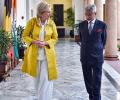
India and Belgium on Monday explored potential defence engagements in the Indo-Pacific, particularly in the maritime domain, and discussed ways to strengthen defence industrial cooperation.

Notwithstanding the economic complementarities and the host of agreements for deepening economic relation on a host of areas, both sides share common viewpoints on the foreign policy domain and seek common grounds to serve as a counterweight to China, notes Dr Rajaram Panda.

Russian President Vladimir Putin stated that Moscow would not interfere in the "delicate" bilateral relations between India and China, expressing confidence in their ability to resolve border disputes amicably. He also discussed Russia's independent partnerships with both nations, touched upon India-Pakistan ties, and highlighted ongoing and proposed defence cooperation with India, including the BrahMos missile and a potential Su-57 fighter jet project.

Prime Minister Narendra Modi and US Secretary of State Marco Rubio discussed various aspects of India-US bilateral ties, focusing on defence, trade, energy, and technology. Rubio extended an invitation from President Donald Trump for PM Modi to visit the US.
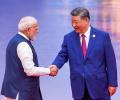
India's dual pursuit of a robust strategic partnership with Washington and a pragmatic, tension-management policy with Beijing represents the essence of modern multi-alignment. By embracing economic pragmatism, learning to compartmentalize political differences, and engaging in continuous dialogue, India can secure its borders, grow its economy, and contribute to a stable, multipolar Asian century, points out Ambassador Rajasekhar.

Myanmar President U Min Aung Hlaing assured Prime Minister Narendra Modi that Myanmarese territory would not be allowed to be used against India's security interests, as the two leaders held wide-ranging talks to boost bilateral ties in trade, defence, and energy.

Estonian tech startups in AI, cybersecurity, defence, and medicine are showing interest in collaborating with India, aiming to tap into its vast market. Latitude59, a prominent startup conference, is considering hosting a networking event in India next year to foster these partnerships.
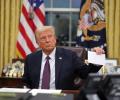
US President Donald Trump signed the National Defence Authorisation Act for Fiscal Year 2026 into law, highlighting broadened engagement with India and addressing the challenge posed by China in the Indo-Pacific region.

Prime Minister Narendra Modi is scheduled to visit Israel for two days to discuss bilateral and regional issues, marking his second visit to the Jewish state and highlighting the growing strategic partnership between India and Israel.

India has expressed its expectations for Saudi Arabia to consider 'mutual interests and sensitivities' in their bilateral strategic partnership, following Riyadh's strategic defence pact with Pakistan.
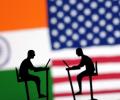
Commerce and Industry Minister Piyush Goyal announced that a US team is expected to visit India next month for trade talks, following an earlier Indian delegation's visit to Washington, DC, in April to finalise an interim pact and advance negotiations for a broader bilateral trade agreement.

Prime Minister Narendra Modi addressed the Israeli Parliament, reaffirming India's support for Israel in the face of terrorism and expressing support for the Gaza peace initiative.

US President Donald Trump described Prime Minister Narendra Modi as 'a Great One', while Russia hailed him as the 'doyen of all Indian prime ministers' as world leaders congratulated him on becoming India's longest continuously serving elected representative at the top post.

The Indian government informed Parliament that India and the US are engaged in negotiations for a mutually beneficial multi-sectoral bilateral trade agreement. The two countries also cooperate on strategic, economic, and defense matters, managing divergences through high-level dialogues.

Prime Minister Narendra Modi met his Italian counterpart Giorgia Meloni in Rome to discuss ways to strengthen the India-Italy friendship, marking the final leg of his five-nation tour.

Prime Minister Narendra Modi's visit to Israel aims to strengthen the strategic partnership between the two nations, focusing on cooperation in various sectors including defense, technology, and trade.

Pakistan's Air Force Chief Zaheer Ahmed Baber Sidhu visited the US to enhance bilateral defence cooperation, following a similar visit by the Army Chief. The visit included meetings with US military and political leaders to discuss regional security, counter-terrorism efforts, and future cooperation.

Foreign secretary Vikram Misri on Friday shared key details on agreements between India and the UAE, stating that the UAE will store up to 30 million barrels of crude oil in India's strategic petroleum reserve following Prime Minister Narendra Modi's visit.

European Commission President Ursula von der Leyen says India and the EU are close to a 'historic trade agreement' that could create a market of two billion people and account for almost a quarter of the global GDP.

India and Japan on Thursday agreed to enhance military exercises and defence cooperation as the two countries emphasised that the bilateral special strategic and global partnership plays a crucial role in ensuring a free, open and rules-based Indo-Pacific, amidst China's aggressive behaviour in the region.

Prime Minister Narendra Modi held talks with Venezuela's acting President Delcy Rodriguez, focusing on strengthening bilateral relations. This marks the first conversation between the leaders since Nicolas Maduro's capture.

Senior officials from India and the US engaged in virtual talks to discuss bilateral ties, focusing on trade, investment, critical minerals, and energy security, including civil nuclear cooperation.
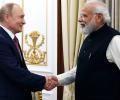
Prime Minister Narendra Modi spoke with Russian President Vladimir Putin, discussing the Ukraine conflict and reaffirming the commitment to deepen the India-Russia strategic partnership. The conversation occurred amid US pressure on India over Russian oil purchases.

India and Canada are negotiating a long-term uranium supply agreement worth $2.8 billion. They are also exploring expanded civil nuclear cooperation after the passage of the SHANTI Bill.

India and Canada solidify their partnership with a landmark uranium supply agreement and discussions to finalise a comprehensive economic partnership, signaling stronger ties and cooperation on key global issues.

In a region increasingly shaped by competition and coercion, such collaboration strengthens security without confrontation, builds capacity without dependency and promotes order without domination, points out Dr Kumar.

Delhi must now purge the delusional hopes of being a 'counterweight' to China in the US calculus, argues Ambassador M K Bhadrakumar.

For India, much is at stake: Crucial energy supplies traversing the Strait of Hormuz, the fate of its 10 million citizens living and working in West Asia -- who send generous remittances home -- and its major trade links with the region.

Israel initiated military action against Iran shortly after Prime Minister Narendra Modi's visit, capitalising on a fleeting opportunity and years of strategic preparation, according to Israel's ambassador to India.
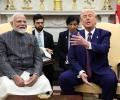
Prime Minister Narendra Modi and US President Donald Trump discussed enhancing economic ties and a potential trade deal during a phone conversation.

Singh and Shoigu held extensive talks, covering the regional security situation and key aspects of bilateral defence relations, including industrial partnership, at a meeting on the sidelines of a conclave of the Shanghai Cooperation Organisation (SCO) in New Delhi.
